Facilities

our facilities

At the heart of central New York State, our facilities stand as a testament to the fusion of groundbreaking technology and unwavering commitment to excellence.

Within these walls, a symphony of state-of-the-art equipment operates in perfect harmony, guided by the skilled hands of our dedicated team. Every aspect of our operation is calibrated for precision, from the meticulously controlled environments that house our advanced machinery to the rigorous training regimes that ensure our staff are experts in their respective fields.

This blend of cutting-edge technology and deep expertise enables us to push the boundaries of quality and innovation, ensuring that every product we create not only meets but surpasses the highest standards of excellence. Our commitment to sustainable practices is woven into the fabric of our operations, ensuring that our pursuit of scientific advancement contributes positively to our community and the environment. In this way, we are not just creating products; we are setting new benchmarks for quality and sustainability in the industry.

Cicero Roasting Plant

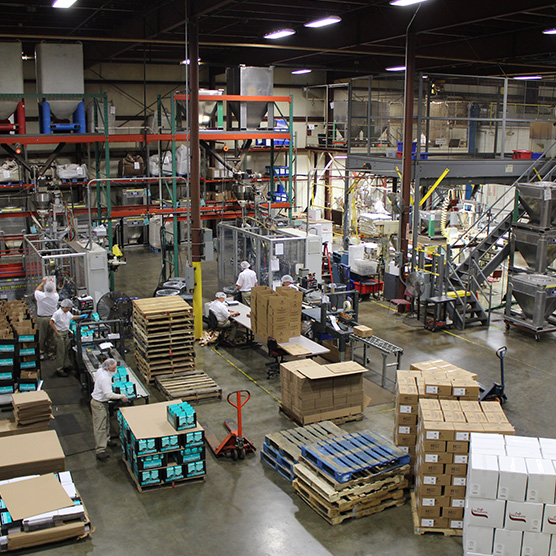
Built in 1990, the Cicero Roasting Plant is the principle roasting facility for deLima coffee’s operations. The plant is located on Pardee Road just north of Syracuse, New York where all our coffee is roasted and packed. Here, we operate our modern industrial coffee roasting and packing equipment with state of the art analysis and quality control peripherals.
Factory Store

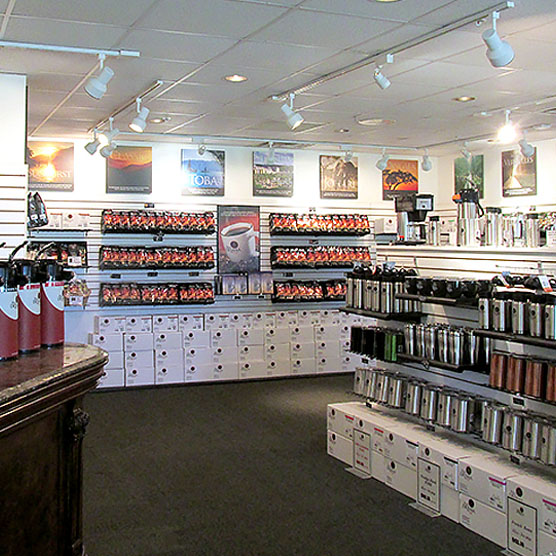
Also in Cicero, NY, attached to the roasting plant, is our factory store. Our factory store carries a large variety of freshly roasted ground and whole bean coffee along with a variety of teas, coffee-related supplies, and confections. Complimentary coffee is available. Stop in and see us!

Monday-Friday 9AM-5PM

PDL facilities are off limits to the public due to the COVID 19 Situation. The Factory Store is open.

Orders can be placed online or over the phone 315.457.3725
Liverpool Headquarters & Distribution Campus

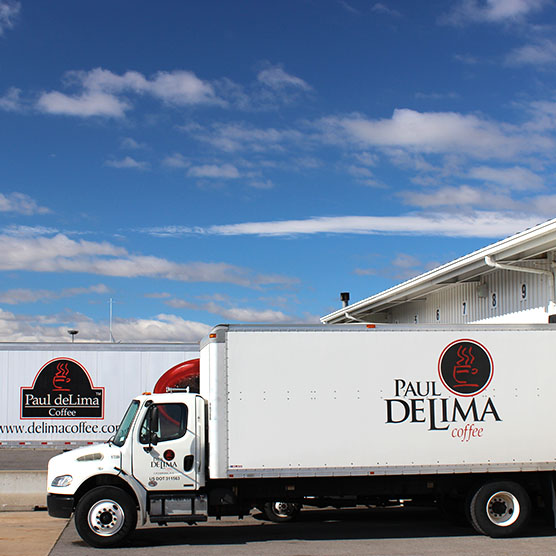
In 2005 Paul deLima Coffee acquired the former Crouse Hinds facilities in Liverpool, NY and brought the abandoned facilities back to life. It now functions as our headquarters, main distribution center, sales office, customer service center, equipment service center, and houses several additional packaging lines.
Quality Control

Safety. Consistency. Integrity.

Process

A small test batch of beans is sent from origin to the Paul deLima facilities and is analyzed by our expert staff of ‘cuppers’. The beans are tested for fragrance, acidity, flavor, body, aftertaste, and balance, and are graded on a scale of one to ten. Those tests are repeated when the ‘lot’ of coffee arrives at each leg of its journey to confirm that the beans were not altered in any way.

During the roasting process, coffees are sampled from the roaster/cooler to ensure that their roast profiles match those generated during development. These can range from the roast color (where it is on the spectrum of light to dark) to the moisture content post–roast.

If a ground product, the grind will be tested using laser diffraction to ensure the grind particle size distribution analysis matches the profile.

Cupping

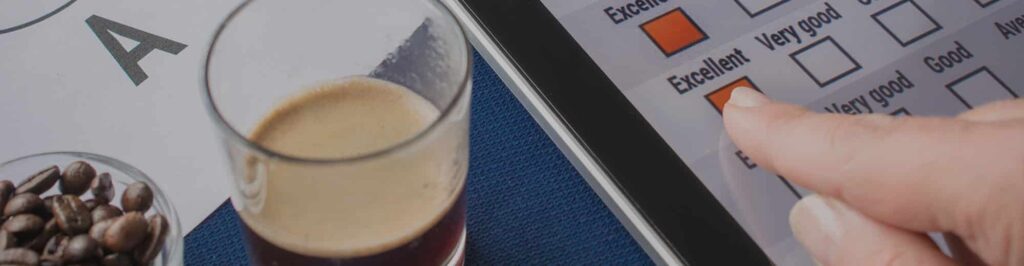
Cupping is the sensory evaluation of brewed coffee, a quality control procedure used to ensure that the finished product matches the characteristics of the coffee at origin, bringing you a consistent, authentic taste. Every product is cupped once packed by a highly attuned sensory panel of experts. Being a cupper requires training, testing, and constant evaluation to be able to scientifically quantify tastes and textures.

We primarily use the cupping technique for two main purposes: to approve of the green coffee we are purchasing, and ensure that the coffee we produce meets our high standards.

When cupping, an apprentice fills a small bowl with hot water and a high concentrate of coffee grounds. After steeping for several minutes, the crust (coffee that has solidified on top of the liquid) is cracked with a spoon, releasing the first burst of aroma, which is the first evaluation the six-point list of cupping criteria. The cupper then dips a metal spoon into the bowl and slurps a combination of coffee and air in order to coat all of their taste buds. The coffee is then evaluated on the following criteria:

  • 1. Fragrance/Aroma

    Aromatic perception of gases released from brewed coffee.

  • 2. Acidity

    Corporeal gustatory perception of hydrogen ions in brew, an actual sensation of the tongue, ranked by intensity.

  • 3. Flavor

    Combination of Aroma and Taste with the modulation of basic taste profiles (sweet, sour, bitter, salty…).

  • 4. Body

    The sensory perception of mouth feel from the fats, oils, and sediments.

  • 5. Aftertaste

    Perceived flavor sensations that remain or emerge after the coffee has been swallowed or spit.

  • 6. Cupper's Points (Balance)

    The preference of the evaluator or overall liking (ranked -5 to +5).

Ranking

Points are then added for an overall total, with fifty points added to bring the scale out of 100. Exceptional coffees can, in theory, score over 100 but it is very rare and subjective. Coffees are classified into the following categories:

Class 1 (Specialty Coffee) 90-100
Class 2 (Premium Coffee) 80-89
Class 3 (Exchange Grade) 70-79
Class 4 (Below Grade) 60-69
Class 5 (Out of Grade) 50-59

Questions?

Call us at 315.457.3725 or fill out the form below.

"*" indicates required fields